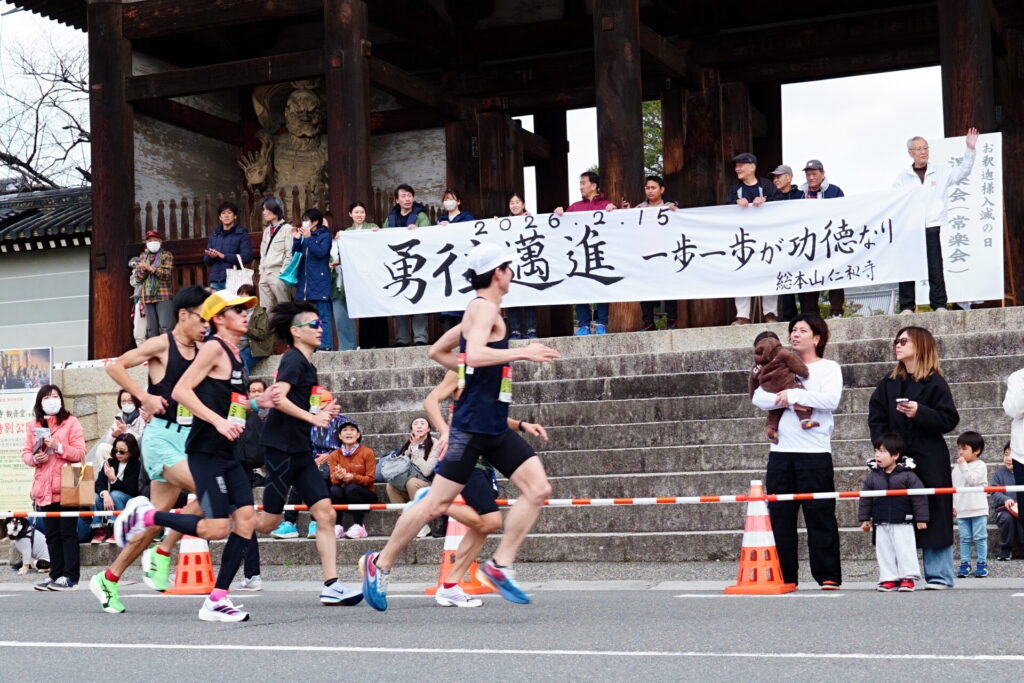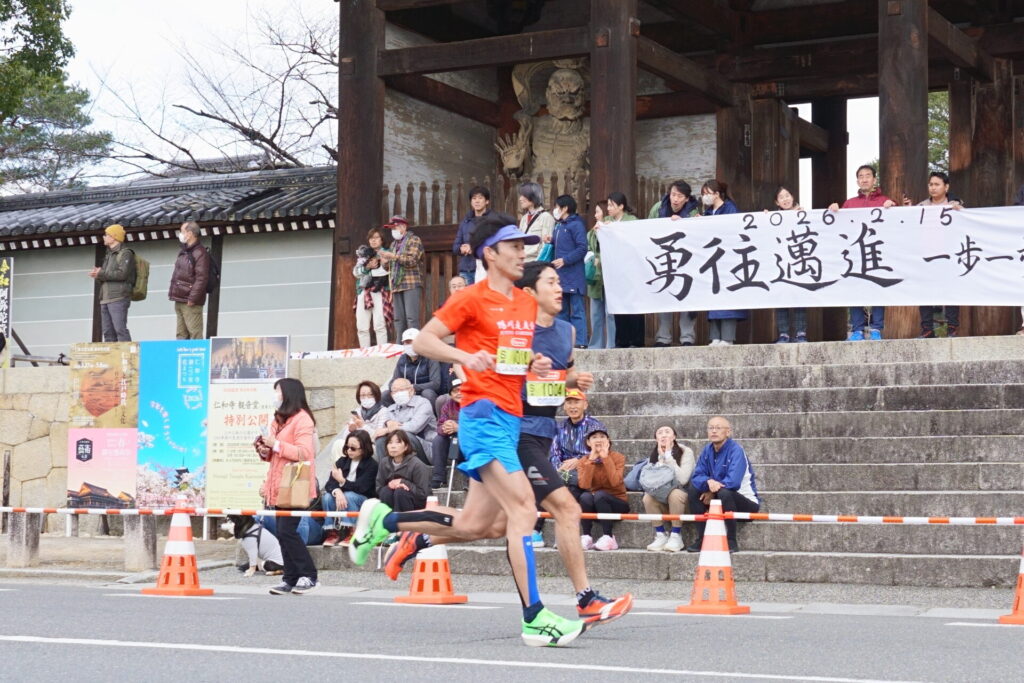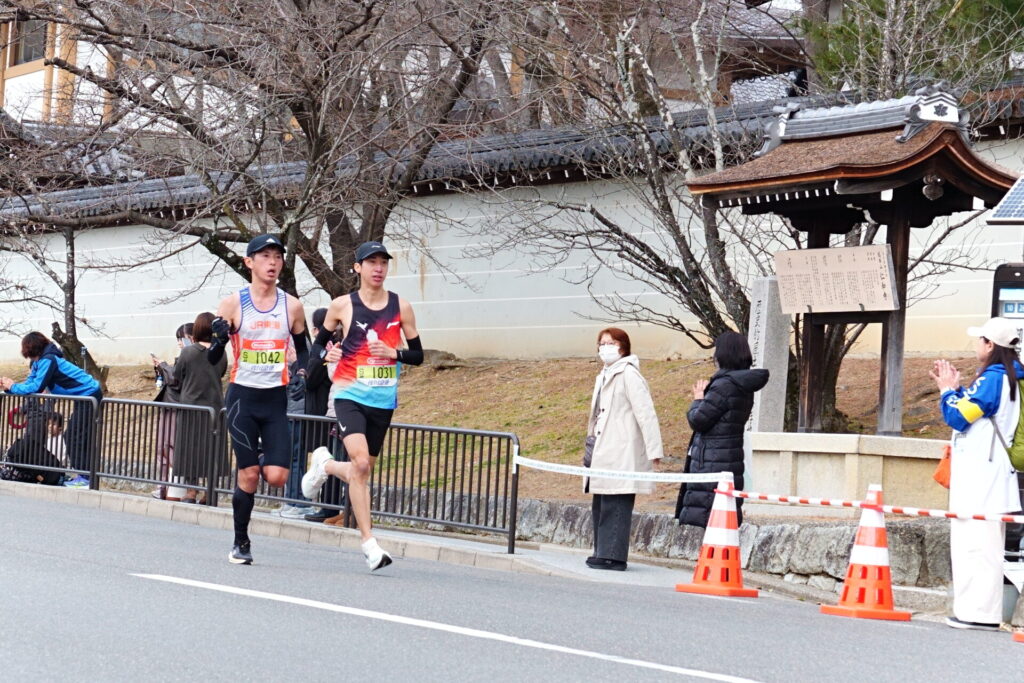
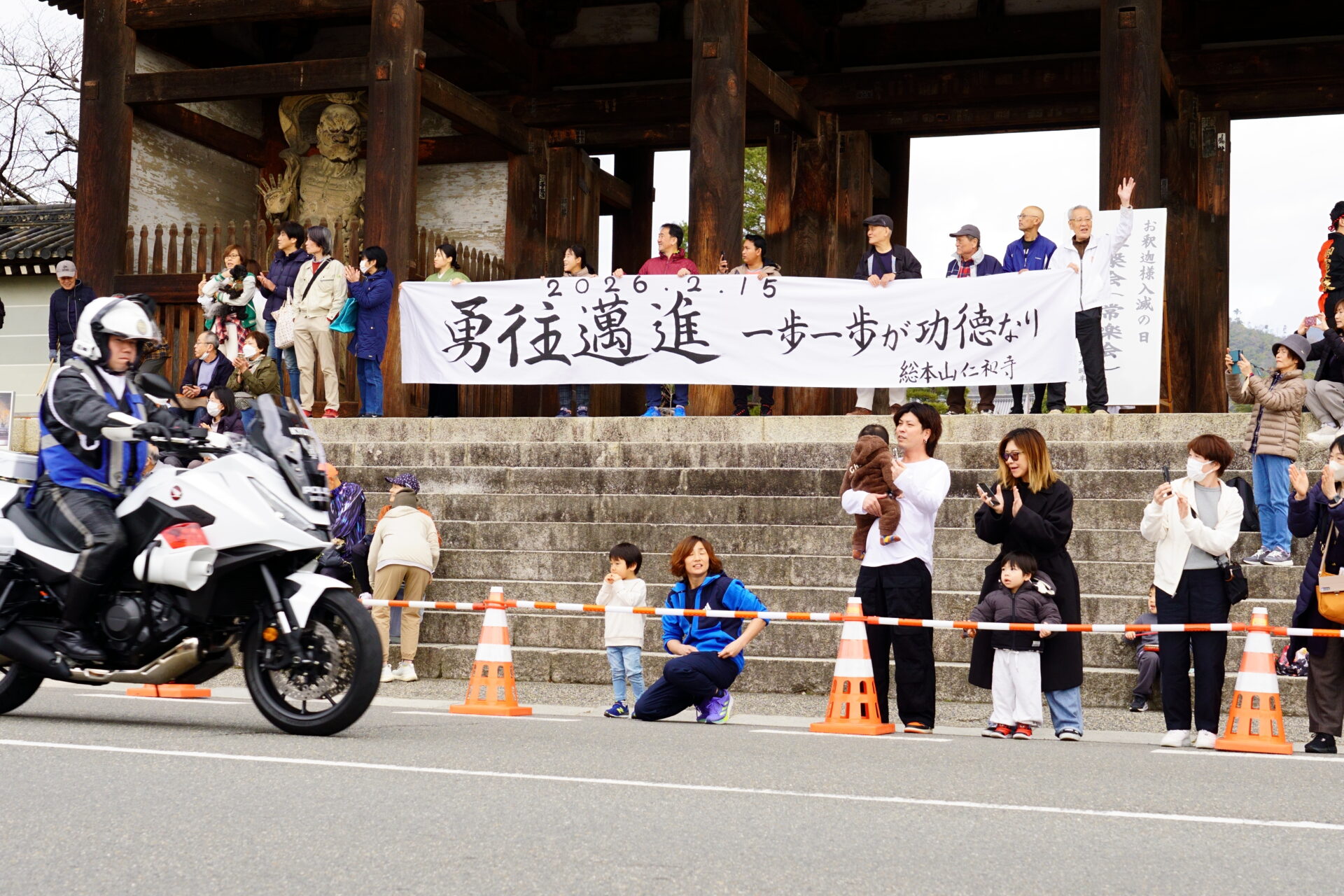
The Route: The course takes you past seven UNESCO World Heritage sites, including the famous Tenryu-ji Temple and Kinkaku-ji (The Golden Pavilion). You’ll run along the scenic Katsura and Kamo Rivers, with stunning views of the surrounding mountains.
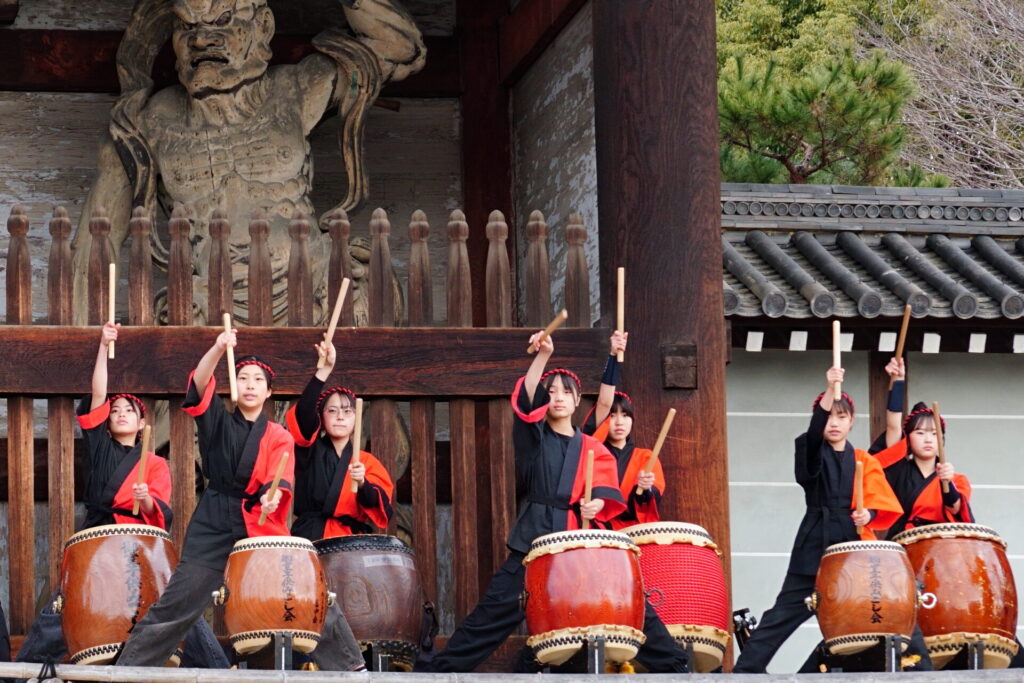
Cultural Spirit: Rather than just loud music, you’ll often find traditional Japanese drummers (Taiko) and local supporters cheering you on in a uniquely respectful and uplifting atmosphere.
Eco-Friendly Focus: The race operates under the concept of “DO YOU KYOTO?”—a phrase born from the Kyoto Protocol meaning “Are you doing something good for the environment?” It’s a leader in sustainability, featuring paperless registration and extensive recycling.
Finisher’s Rewards: Runners receive a high-quality commemorative towel and a unique medal, often featuring traditional Japanese motifs or lacquerware-inspired designs.
Starting my photography journey in 1998 during my time as an expatriate in Singapore, I have now been a photographer for over 20 years. My deep affection for Kyoto is reflected in my work, which has been exhibited internationally. I am a photographer with a global perspective, dedicated to capturing the universal beauty found in the interplay of light and shadow.
My core focus is on documenting and preserving Kyoto's landscape, which is being negatively affected by the rapid increase in inbound tourism. I work across genres—from landscapes to portraits—always prioritizing the unique "essence" of the subject and the atmosphere of the moment. I am also actively engaged in international photographic expression, including photo shoots for tourists visiting Japan, exhibiting my work both domestically and abroad, and participating in cultural exchange projects.
2008年日本写真家協会(JPS)展 入選(プロ写真家への登竜門)Selected for the 2008 Japan Professional Photographers Society (JPS) Exhibition (a gateway to becoming a professional photographer)
International Exhibitions: The Japan Foundation, Los Angeles (JFLA) and the Consulate-General of Japan in New York's annual Sakura Matsuri (Cherry Blossom Festival)
The eaves of a traditional townhouse bathed in light and shadow, the stone-paved streets silent in the early morning, and the back alleys where the scent of daily life lingers.
Instead of the "Kyoto-ness" seen in tourist brochures, my mission as a photographer is to document and convey the genuine Kyoto—the lives of the people who live here and the atmosphere shaped by the passage of time.
However, this Kyoto is being quietly destroyed.
The traditional townhouses of Kyoto are not just scenery; they are a way of life.
Now, they are being sold off, along with their "memories of life," under the guise of temporary lodging businesses.
Tourism is undoubtedly a major industry that supports Kyoto. There is no denying that. However, if tourism transforms Kyoto from "a city for its residents" into "a spectacle for tourists," it becomes an act of cultural destruction.
I don't want to photograph a "tourist destination." I want to photograph a "living Kyoto," where people live, gather, and connect.
I will continue to photograph Kyoto. To document and share the "authentic Kyoto" that still remains. And I hope to contribute, even in a small way, to returning Kyoto to a place where "daily life, not tourism, is the main character."
Kyoto is not a place to see; it's a place to live.