Between "circumstances that prevent return" and "rules that must be followed". A New Step Forward by the Immigration Administration
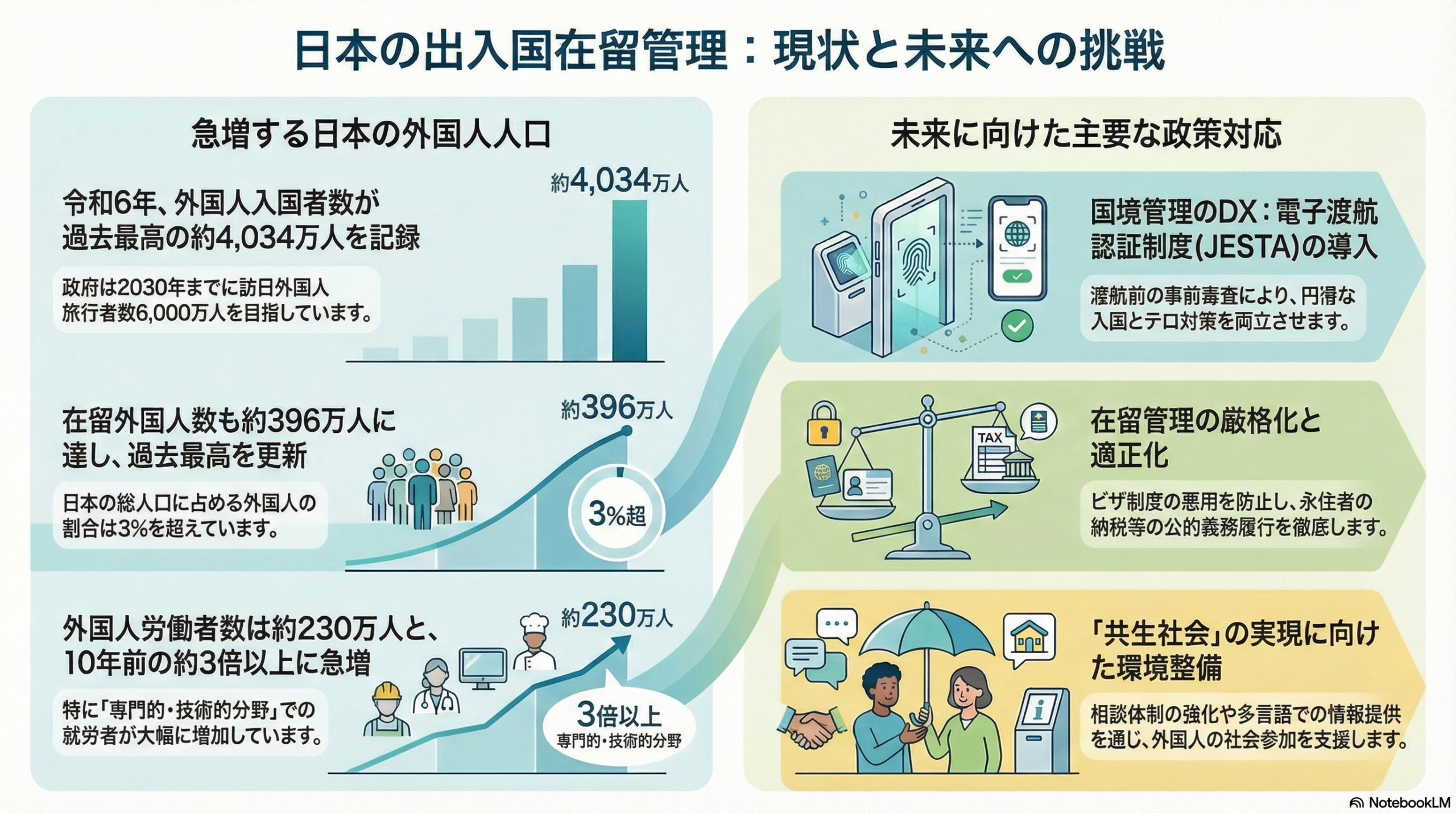
In order for Japan to remain an "open country" in the future, the immigration system is now under review.
The "Roundtable on Immigration and Residency Management Policy," a private advisory body to the Minister of Justice, serves as the compass for these discussions. The Council convenes to draw up a grand design that is of vital importance: how to balance the "smooth acceptance" that supports economic development and international exchange with the "proper management" that protects the safety of society in accordance with the changing times.
Within this major trend, the issue of "internment and repatriation" is one that is now being particularly urgently addressed.
The reality is that I have to say, "I want you to go home."
There are foreigners who continue to stay in Japan after their visas have expired for various reasons. The role of the government (Immigration and Immigration Control Agency) is to tell those who have deviated from the rules in accordance with Japanese law to return to their own country. This is called "deportation.
The reality, however, is not so easy. Some people have expressed their fear for their lives if they return to their home countries, while others have repeatedly applied for refugee status in order to avoid returning to Japan. While there are such sincere appeals, there are also an increasing number of cases in which people repeatedly apply for refugee status in order to avoid returning home, exploiting the gaps in the system.
The dilemma of "accommodating" the government
If more people refuse to return home, the government will have to make a difficult decision. If they allow them to live freely in the city as they are, the rules of society will no longer be observed. On the other hand, prolonged "detention" in an institution until they return to their own country will place a heavy burden on their physical and mental health.
You have to follow the rules," he said. But keeping them locked up all the time isn't right either."
In order to resolve this boardroom situation, the administration is now trying to put in place a new system after discussions in the technical committee.
Toward a Balance of Flexibility and Rigor
The new role being promoted by the administration consists of two main pillars.
- Watch and wait" system (supervisory measures) Until now, there were almost two choices: "house them or set them completely free. We have changed this situation and created a more flexible option whereby the residents can live outside the facility while preparing to return to their home countries, provided that they are closely monitored by relatives and supporters.
- Mechanisms to prevent "abuse of the system While we quickly protect those who really need help, we have made it possible to proceed with repatriation under certain conditions in cases where a person repeatedly applies for refugee status in order to avoid repatriation.
The Administrative Gaze to Protect a Fair Society
The goal of the Immigration and Residency Management Policy Council is not simply to strengthen "crackdowns" on immigration. It is to "protect an environment in which all people living in Japan can live safely under the rules.
This reform is an update to a system that is both "kind" in its consideration of individual circumstances and "strong" in its maintenance of Japanese law and order. The life of each individual and the discipline of society as a whole. The government's important role in supporting Japan in the future is to continue to strike a balance between these two aspects.
 日本語
日本語  English
  简体中文
简体中文  Français
  Español
  한국어
한국어  Tiếng Việt