I will reply to you within 24 hours/.
The end of "Permanent residents can now rest easy" —— The ripple effect of stricter revocation requirements for permanent residence permits
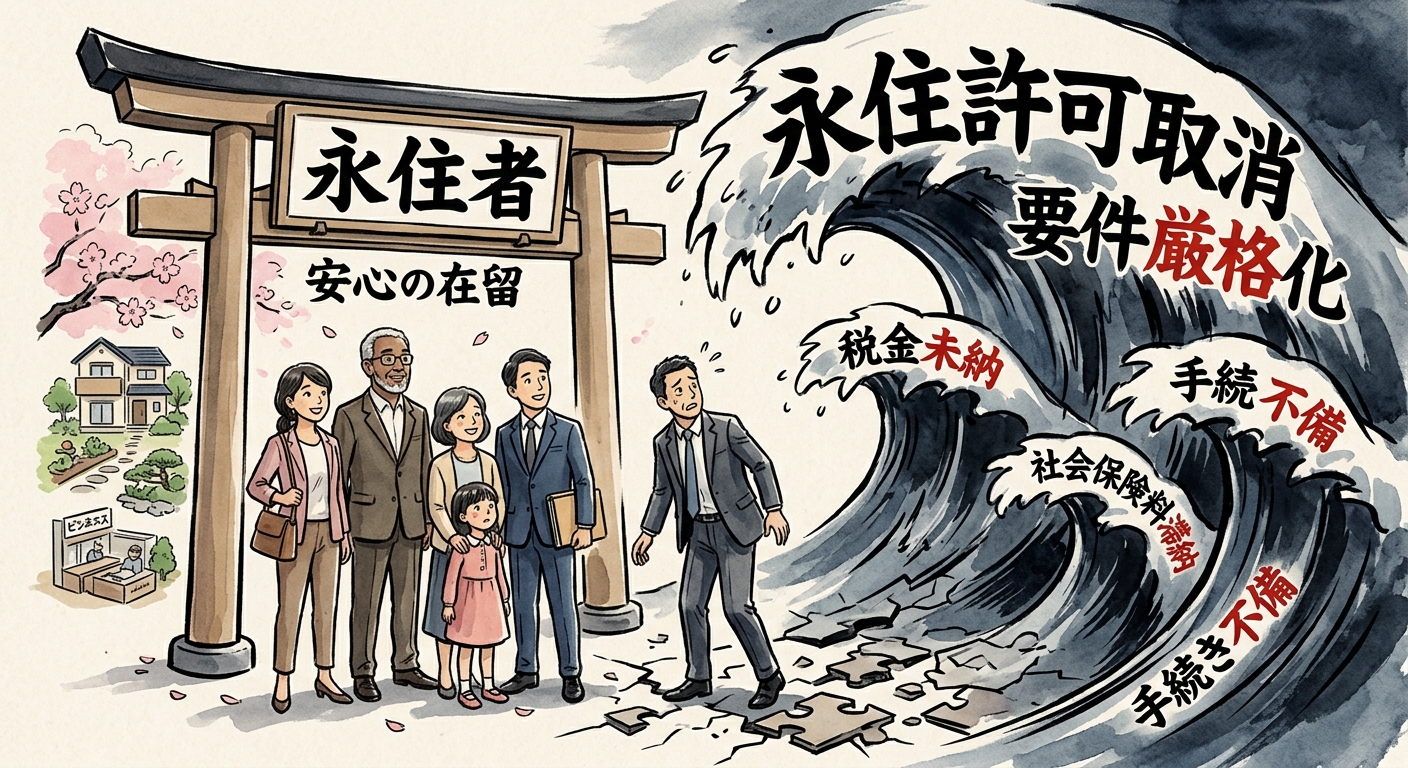
What is generating the greatest anxiety and interest within the foreign resident community isStricter permanent residency requirements, including the introduction of a permanent residency revocation system.
As detailed guidelines are being adjusted for full-scale implementation starting in 2027, this legal revision is fundamentally shaking the status of permanent residents, whose residency was previously thought to allow them to live in Japan semi-permanently once acquired.
There are three main reasons why foreign talent is experiencing significant uncertainty regarding this issue.
- Cancellation risk due to "intentional non-payment of public taxes and dues"If taxes and social insurance premiums are "intentionally" unpaid or in arrears, permanent residence permits will be subject to revocation. Although grace periods for accidental job loss are being considered, anxiety is spreading regarding the operational boundary of "where it is considered intentional." In Toyota City, Aichi Prefecture,
- Strict enforcement of frequent reporting obligationsProcedural mistakes, such as failing to notify a change of address when moving or forgetting to renew a residence card, can also be used as grounds for revocation, which increases the psychological pressure regarding daily procedures.
- Restructuring a life planFor those who have aimed for "permanent residency" on the premise of purchasing a home in Japan and living there long-term with their family, the future instability of this status is a critical life-or-death issue directly tied to their careers and life planning.
While the government has the objectives of "system optimization" and "consideration for public sentiment," there are also many voices of confusion from foreign residents living honest lives, who say, "Although we are contributing as members of Japanese society, we feel like we are constantly being watched."
This polarization—where the "training and employment" system widens the entry points while the endpoint of "permanent residency" is tightened—represents a major test for the front lines as to whether Japan can continue to be a country where people can safely entrust their lives in the future.